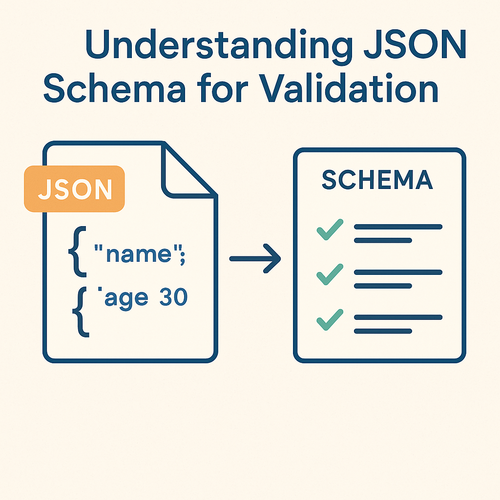
In the ever-changing landscape of web development and data exchange, JSON has become a crucial format for sharing data between systems. As applications get more intricate, it’s vital that the data follows a particular structure. This is where JSON Schema steps in—a robust tool that not only ensures that JSON data is formatted correctly but also improves how different systems work together.
This article will dive into the importance of JSON Schema, how it functions, and the common patterns used for data validation.
What is JSON Schema?
JSON Schema is like a rulebook for JSON documents that helps in organizing and validating the data. It outlines how the JSON data should be arranged, including its properties, types, and value restrictions. With JSON Schema, developers can create rules that the JSON data must follow, making sure it meets the standards required for it to be processed successfully.
According to the official JSON Schema organization, “JSON Schema is a vocabulary that allows you to annotate and validate JSON documents.” This feature is especially important when developing APIs, exchanging data, and bringing together different systems where the accuracy and integrity of the data are crucial.
The Structure of JSON Schema
A JSON Schema document is itself a JSON object comprising several key parts: types, properties, required fields, and patterns. Think of the basic structure like this:
{ “type”: “object”, “properties”: { “propertyName”: { “type”: “string” } }, “required”: [“propertyName”] }
This example illustrates an object with a necessary property called “propertyName,” which must be of the string type.
Validating JSON Data
To check JSON data against a schema, you usually use a library that follows the JSON Schema guidelines. For example, in JavaScript, popular libraries like Ajv or JSON Schema Validator can help with this.
“Validating a JSON document against a schema ensures that the document adheres to the specified structure and data types, enhancing data integrity and reliability.”
When a JSON document is validated, if it lines up with the schema, it is deemed valid; if not, the validation library will indicate what went wrong.
Common Validation Patterns
There are several typical patterns you might encounter when using JSON Schema, like defining arrays, nested objects, conditional schemas, and using enums. For instance, to specify an array of integers, you would write:
{ “type”: “object”, “properties”: { “numbers”: { “type”: “array”, “items”: { “type”: “integer” } } } }
In this pattern, the “numbers” property is identified as an array that can only hold integers. These kinds of patterns allow for thorough data validation that meets various needs.
Best Practices for Implementing JSON Schema
When using JSON Schema in your projects, keep these best practices in mind:
- Keep schemas simple: Aim for clarity to ensure easy maintenance.
- Use references: For complex schemas, refer to other schemas whenever possible to avoid repeating work.
- Version your schemas: Keep track of changes effectively by versioning your schema documents.
By following these best practices, you can make your data validation smoother and less prone to errors.
Conclusion
In summary, JSON Schema serves as a powerful validator within the realm of JSON data, ensuring that the data follows set structures and rules. By utilizing JSON Schema, developers can boost the reliability of data exchange and processing in their applications. Always remember, effective validation leads to better data integrity, making applications more robust.
Keep in mind the key points: the structure of JSON Schema, common validation patterns, and best practices for implementation. As technology continues to advance, mastering JSON Schema will help ensure your data remains reliable and well-structured in an increasingly JSON-driven world.
Leave a Reply